


HOW TO CHOOSE PROTECTIVE COVERALL? AN OVERVIEW OF PROTECTIVE CLOTHING TYPES AND MATERIALS
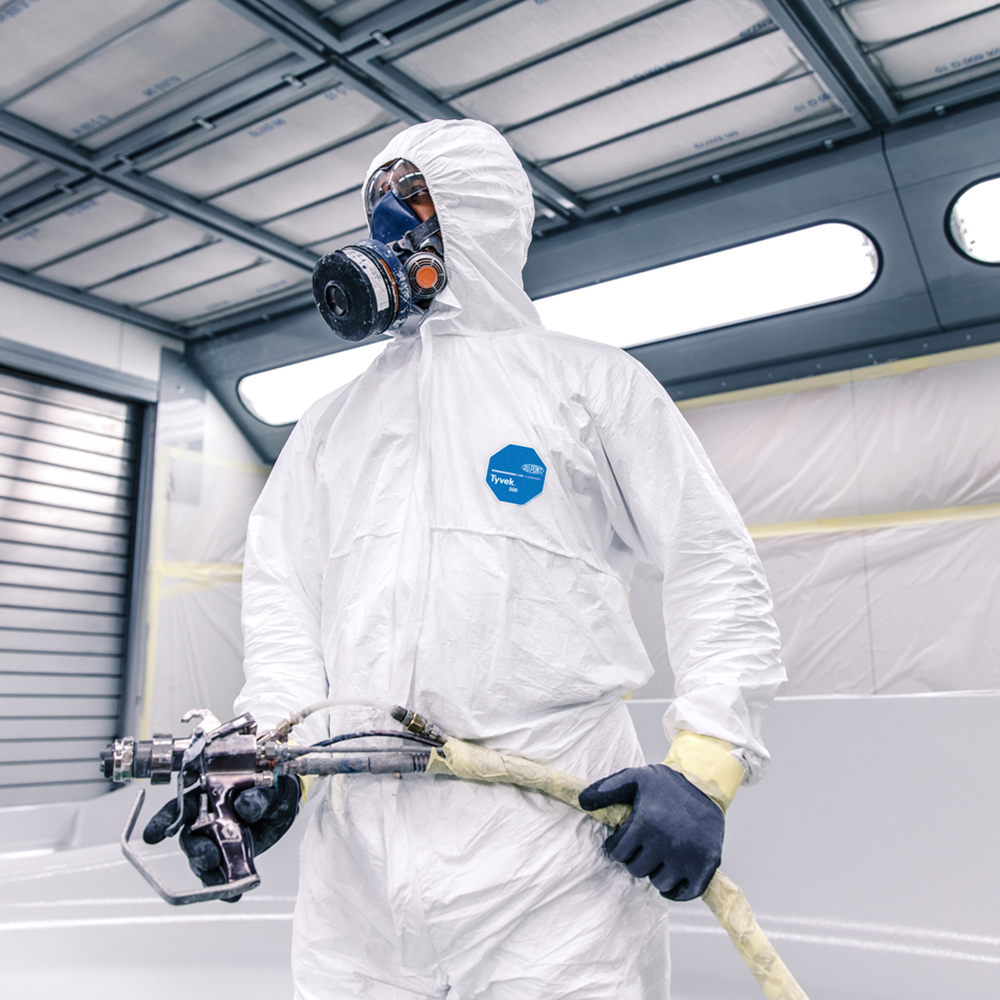
In occupational safety, protective clothing is not just an accessory – it is essential for safeguarding workers’ health and safety. Choosing the right protective clothing requires considering the risks and working conditions present in the environment. Whether the exposure involves chemicals, liquid splashes, dust, or airborne particles, suitable protective coveralls play a key role in ensuring worker well-being.
CATEGORIES
Depending on the materials and construction, protective clothing is divided into three categories:
- CE category I: Suitable for non-hazardous work.
- CE category II: Suitable for work involving variable risk factors. The protective suit has undergone a type-examination, which checks the conformity of the product with the manufacturer’s technical specification and carries out tests to confirm that the product complies with the standards laid down.
- CE category III: Suitable for work involving potentially hazardous or life-threatening risks.
TYPES OF CHEMICAL PROTECTIVE CLOTHING
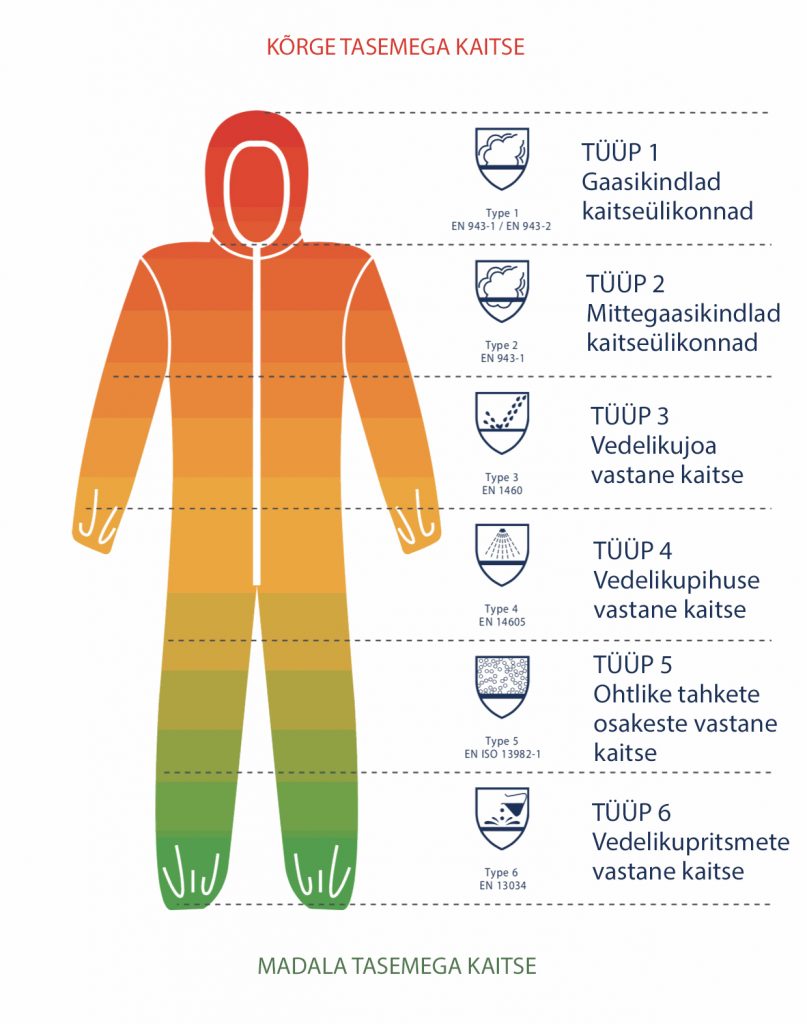
Protective suits for hazardous work (complying with the CE category III standard) are further subdivided into “types” which provide information on the appropriate use. The lower the Type number, the higher the level of protection. One protective coverall may often comply with several Type standards simultaneously.
PROTECTIVE CLOTHING MATERIALS
Not all materials provide the same level of protection – they differ in comfort, durability, breathability, and protective performance. When selecting protective clothing, it is important to understand the protective capabilities of the material.
Below are the most common protective clothing materials, starting from lower protection levels and moving toward higher protection levels:
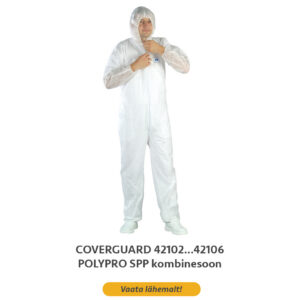
Spunbond Polypropylene (SBPP)
An open-structure material with limited protection against hazardous liquids, making it unsuitable for high-risk environments. SBPP is lightweight, breathable, and cost-effective for simpler tasks requiring protection against dirt and light particles.
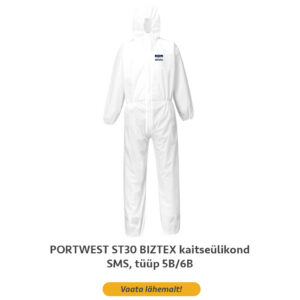
Spunbond–Meltblown–Spunbond (SMS)
A lightweight and breathable multilayer material where the middle layer acts as the primary filter, reducing heat stress and perspiration. It protects against fine particles and dust, and offers limited protection against light liquid splashes (not waterproof).
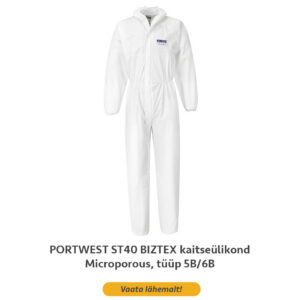
Microporous Film
A multilayer material consisting of a nonwoven polypropylene substrate coated with a microporous film layer. Microporous material provides a good balance between protection and wearing comfort and is widely used across various industries. The breathable material protects against fine particles, dust, and low-concentration chemical splashes. However, the protective performance decreases if the material becomes worn or damaged.
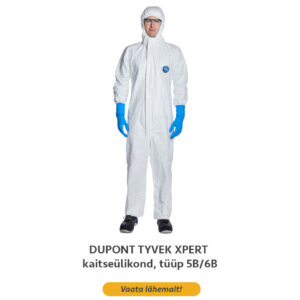
Specialized High-Performance Materials:
Tyvek®
Developed by DuPont, Tyvek® is made from high-density polyethylene using a flash-spun process. This unique nonwoven material contains no fillers or films. The long-lasting protective material withstands intensive use and does not lose its protective properties through wear, unlike microporous materials. Lightweight and breathable, it prevents the penetration of dust and fine particles (down to 1.0 micron) while repelling water-based liquids and aerosols.
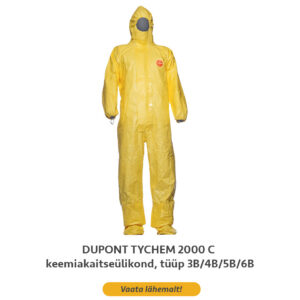
Tychem®
Tychem® is an innovative protective material consisting of multiple barrier layers designed to provide effective protection against chemical permeation, inorganic chemicals, and biological hazards. The material is laminated onto Tyvek®, ensuring a high level of protection and excellent durability. Compared to conventional chemical protective materials, Tychem® is lighter in weight, providing improved wearer comfort.
SUITABILITY OF MATERIALS FOR DIFFERENT TASKS
The table below provides an overview of the suitability of different disposable protective clothing materials for various working environments and applications. The comparison includes common materials such as SBPP, SMS/SMMS, Microporous Film, Tyvek, and Tychem, evaluated according to their protective properties.

⚠️ IMPORTANT TO KNOW! This table is intended as a general recommendation only and should not be used as the sole basis for selecting protective clothing. Every work environment is different, and a thorough risk assessment must always be conducted before choosing suitable protective clothing. It is also important to review the specific product’s features and protective performance to ensure suitability for the intended application and hazards involved.
ADDITIONAL STANDARDS
Some protective suits and their materials are marked with specific additional standards.
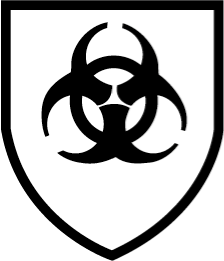
Protection against biological hazards.
EN 14126

Anti-static properties.
EN 1149-5

Protection against radioactive contamination.
EN 1073-2
Choosing the right protective clothing requires a thorough understanding of the risks, the nature of the work, and the working environment. Only then can maximum worker safety be ensured and the risk of accidents, injuries, and health damage minimized.
An incorrect choice may lead to serious consequences, which is why it is essential to assess workplace risks carefully and select protective clothing that meets both regulatory requirements and actual working conditions.
A safe working environment starts with the right choices.
You can find the full selection of protective clothing HERE.


Follow us on social media:
Join our mailing list! Sign up to receive email updates on new products, special offers and more.